





In an era where distractions multiply by the minute, mastering time management methods isn’t just a productivity hack it’s a survival skill. Whether you’re a student balancing studies, a professional managing multiple projects, or an entrepreneur leading a team, effective time management can transform how you work, think, and live.
This comprehensive guide explores proven, research-backed techniques to unlock productivity and efficiency, with actionable steps you can implement right away.
Understanding the Core of Time Management
At its core, time management is about making intentional choices. Every minute spent aligns (or misaligns) with your goals. When you manage time efficiently, you direct your energy toward what truly matters creating a ripple effect of better performance, lower stress, and higher satisfaction.
Why It Matters More Than Ever
According to the American Psychological Association, lack of effective time management is one of the top three causes of workplace stress. Modern professionals spend up to three hours daily on unplanned tasks or digital distractions leading to burnout and inefficiency.
Good time management means working smarter, not longer, achieving the same (or better) results in less time.
Related Reading: Resilient Routines: Research-Based Ways to Restore Calm & Beat Stress
1. The Eisenhower Matrix: Prioritize with Purpose
The Concept
Developed by President Dwight D. Eisenhower, this matrix helps you classify tasks by urgency and importance:
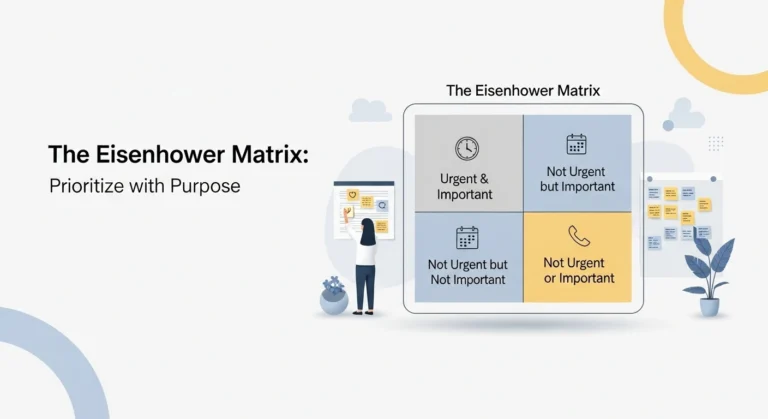
Quadrant Type of Task
I. Urgent & Important
II. Not Urgent but Important
III. Urgent but Not Important
IV. Not Urgent or Important
Example
Client deadlines, crises
Planning, strategy
Interruptions, calls
Social scrolling
Action
Do immediately
Schedule
Delegate
Eliminate
Why It Works
By visually mapping your responsibilities, you instantly identify time-wasting activities. This method supports decision-making clarity and aligns perfectly with cognitive psychology’s focus on goal-directed behavior.
Tip: Schedule Quadrant II tasks (long-term, non-urgent goals) weekly. These build progress quietly like career growth, health, or skill learning.
2. The Pomodoro Technique: Beat Procrastination and Stay Focused
The Method
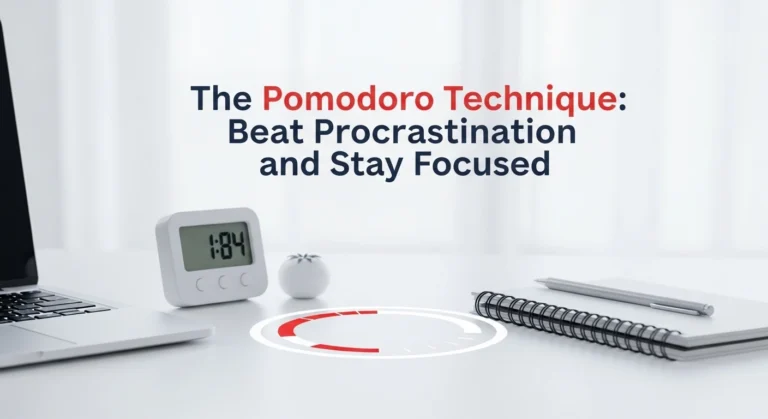
Invented by Francesco Cirillo, this method breaks your work into 25-minute focused intervals (Pomodoros) separated by 5-minute breaks. After four Pomodoros, take a 20–30-minute break.
The Science
Research shows that sustained attention wanes after 20–30 minutes. By resetting your brain frequently, you prevent mental fatigue and improve retention.
Best for: Students, writers, developers, and professionals dealing with creative or analytical work.
External Source: Harvard Business Review notes that micro-breaks can enhance focus and creativity by up to 40%.
Pro Tip: Combine Pomodoro with website blockers like Focus@Will or Forest for digital discipline.
3. Time Blocking: Structure Your Day for Maximum Output
What It Is
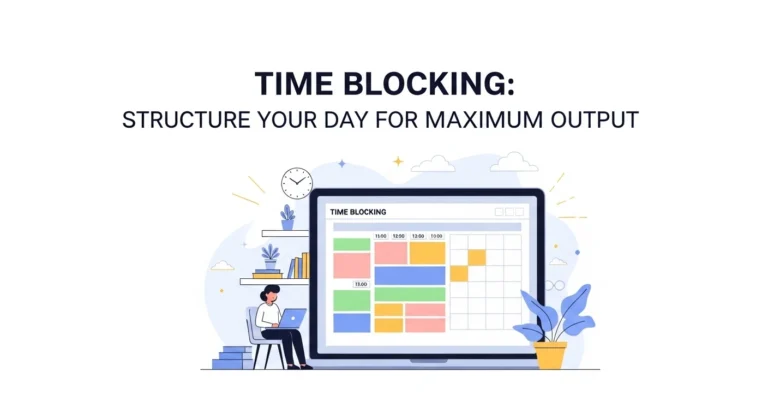
Time blocking means scheduling specific chunks of time for certain tasks meetings, deep work, and even rest. Every hour has a purpose.
How to Use It
- Identify your top 3 priorities.
- Assign each priority a dedicated block (60–120 minutes).
Protect that time as if it were an appointment with your future self.
Why It’s Effective
Neuroscience research shows that multitasking lowers productivity by up to 40%. Time blocking counters this by forcing single-task focus.
Example:
- 9–11 AM: Deep project work
- 11–12 PM: Emails & communication
- 1–3 PM: Meetings or collaborative work
Internal Resource: Explore structured entrepreneurship habits in Bottle-to-Business Blueprint: 10 Tips for Turning Passion into Profit.
4. The Pareto Principle: Focus on the 20% That Drives 80%
The Idea
The 80/20 rule states that 80% of results come from 20% of your efforts. Identify your “vital few” tasks or clients that generate the most value.
Application
- Review your weekly to-do list.
- Highlight tasks with measurable outcomes.
- Eliminate or delegate low-impact activities.
Example: If 20% of clients produce 80% of your revenue, focus more on nurturing them.
External Source: MindTools provides step-by-step exercises to help apply this principle effectively.

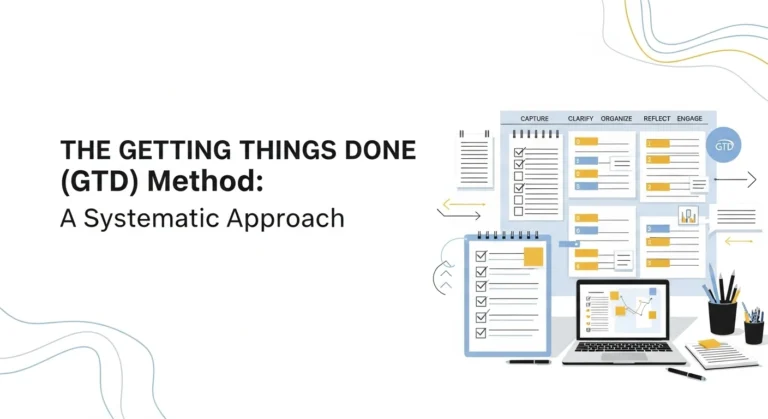
5. The Getting Things Done (GTD) Method: A Systematic Approach
Overview
Created by David Allen, GTD is a five-step workflow that helps you manage tasks without overwhelm:
- Capture: Collect all ideas and tasks in one system (digital or physical).
- Clarify: Define next steps for each task.
- Organize: Categorize by context or priority.
- Reflect: Review lists weekly.
- Engage: Focus on doing, not thinking.
Why It’s Powerful
The GTD system reduces cognitive load. Instead of remembering, your mind processes a key difference supported by cognitive load theory.
Tool Suggestion: Apps like Todoist or Notion can automate GTD workflows.
6. SMART Goal Framework: Turn Intentions into Measurable Success
What It Is
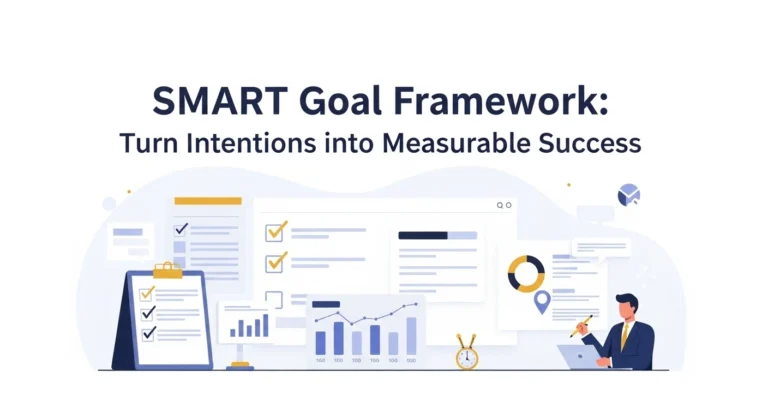
SMART stands for Specific, Measurable, Achievable, Relevant, Time-bound. It’s a goal-setting formula that ensures clarity and accountability.
Example:
❌ “I’ll be more organized.”
✅ “I’ll use the Eisenhower Matrix to prioritize and finish two major tasks before 4 PM daily.”
Why It Matters: Goals that are specific and time-limited boost performance by 25–30%, according to Harvard Business School research.
Internal Link: Learn strategic discipline through Money Management: 10 Ways to Get Tax-Ready Without the Stress.
7. Advanced Strategies: Time Management for High Performers
Batch Similar Tasks
Group repetitive tasks (emails, meetings, or social updates) to minimize context switching a major time killer.
Use the “2-Minute Rule”
If something takes less than two minutes, do it immediately. This micro-action rule prevents backlog accumulation.
Apply Technology Wisely
Use tools like:
- Clockify for tracking time spent.
- Notion or ClickUp for project management.
- RescueTime to analyze digital habits.
The Power of Reflection
Spend 10 minutes daily reviewing what worked and what didn’t. Reflection turns routine into improvement.
8. How to Build Consistency and Discipline
Time management fails when discipline fades. To sustain momentum:
- Start Small: Implement one method at a time.
- Review Weekly: Adjust schedules based on outcomes.
- Reward Progress: Celebrate milestones to build positive reinforcement.
- Rest Intentionally: Burnout kills productivity faster than overwork.
External Resource: APA.org emphasizes recovery and rest as crucial for long-term performance.
Final Takeaway: Design Your Time, Design Your Life
The ultimate goal of time management isn’t perfection it’s control. Every strategy, from the Eisenhower Matrix to Time Blocking, gives you ownership of your hours. When you master your time, you master your direction.
Action Step:
Choose one method today. Apply it for 7 days. Track your results, refine your approach, and watch your productivity compound.
Time is your most limited asset. Invest it wisely and let efficiency become your competitive edge.